

Imagine for a moment that you were born in 1838, in a small village in Germany that even today has fewer than 2,000 residents. As a teenager, you worked in a bakery and were taught the trade. Then, at the age of 19, you looked around and realized that there were not a lot of opportunities for you and you needed to make a change. Your brother, who was 10 years older than you, had already emigrated to the United States and was now beckoning you to come join him in America. Would you have the courage to do it?
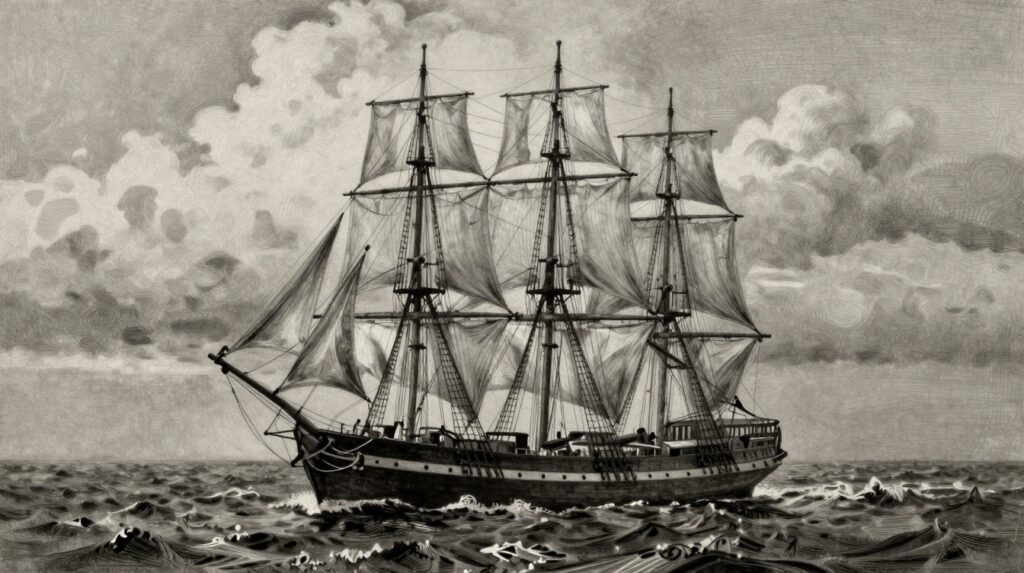
Now imagine what it must have been like to jump on a sailing ship in Brunswick, and make the months-long voyage to New Orleans, followed by a long commute up river to St. Louis in 1857. You meet up with your brother, who has established himself as a truck farmer and you go to work for him, helping him tend his “garden” which is probably several acres in size. Then, in May of 1861, the two of you volunteer for the Missouri Infantry, attached to Nathaniel Lyon‘s Army of the West. He was the commander of the St. Louis Arsenal at that time, and he leads you in a raid that will come to be known as the Camp Jackson Massacre. What a completely surreal experience – you are in a strange country where you don’t speak the language, suddenly in armed conflict with people who are no relation to you, but want to see Missouri secede from the Union. Just a few years earlier, you were baking bread in a small village. How does this even happen?
This is how the story of our ancestor William Fedder begins. From humble beginnings, with a sense of adventure, he staked his claim in the New World, and then he, like the city of St. Louis, began a meteoric rise. Following a severe outbreak of cholera in 1849, which reduced the population by about 10%, the city had just begun to bounce back when William arrived. With a population of 77,000 in 1850, it was the 8th largest city in the US; by 1900, it was 4th – behind only New York City, Brooklyn, and Philadelphia. In parallel with the city’s explosive growth, William grew his own career and sphere of influence, becoming a member of a powerful trade organization, a real estate mogul, and still finding time to pass along the bakery trade to his son Henry Fedder.
William’s wife, Catherine Gerdes, shared his sense of adventure. In 1858, she made the arduous journey from her hometown of Bockhorst, Germany, traveling by herself at the tender age of 17. We don’t know anything about how they met, but we do know that they were married Sep 17, 1863, at Trinity Lutheran Church in Soulard. Their first three children, sadly, all perished before the age of 5. But they would go on to have six more that all lived to adulthood.
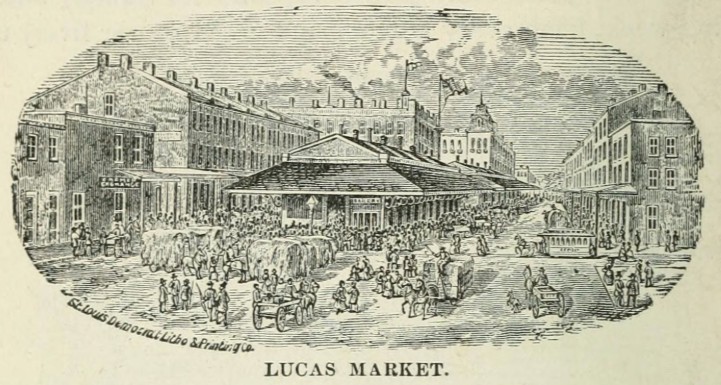
The 1867 City Directory (available as part of the Missouri Historical Society’s Research Library collection), lists William Fedder as a gardener residing at his first farm located at the east end of Tower Grove Park on Grand Ave. His property was just south of his brother August’s farm (also on Grand). By 1869, he was selling his produce from a stall at Lucas Market, which used to sit in the middle of what is now Tucker Boulevard from 1845-1882, and in October 1872, William underwent the naturalization process to become a US citizen.
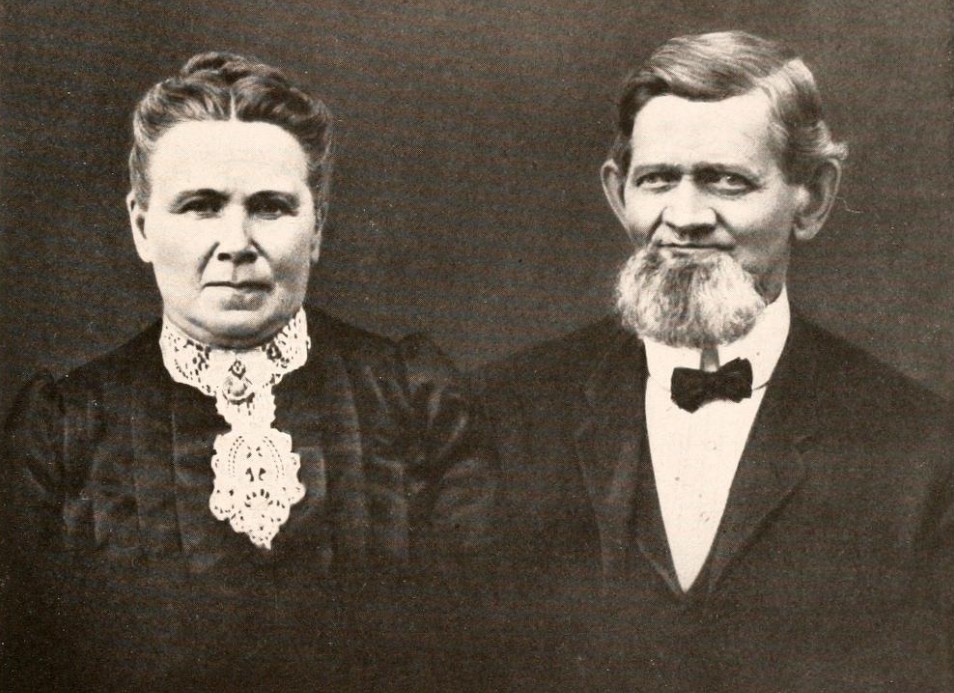
William and Catherine appear on the 1870 and 1880 Censuses living on a small farm on what is now Delmar Blvd east of Clara Avenue, just north of Forest Park. We have no records of his exploits during this time, however he must have done quite well for himself and his family. His success in business is documented in a biographical sketch that appears in the book St. Louis, History of the Fourth City (Stevens, 1909), and it is around 1890 that he begins a second career: that of speculative real estate investor. The book mentions that in the twenty years he spent living on his small farm, the property became quite valuable as the city developed around him, and he sold that land for a “handsome profit.” This allowed him to not only buy a larger farm, but to start acquiring properties around the city. In fact, over twenty different plots of land, that he either developed himself (a bakery in 1905, for example) or held onto for some time before selling at a profit.
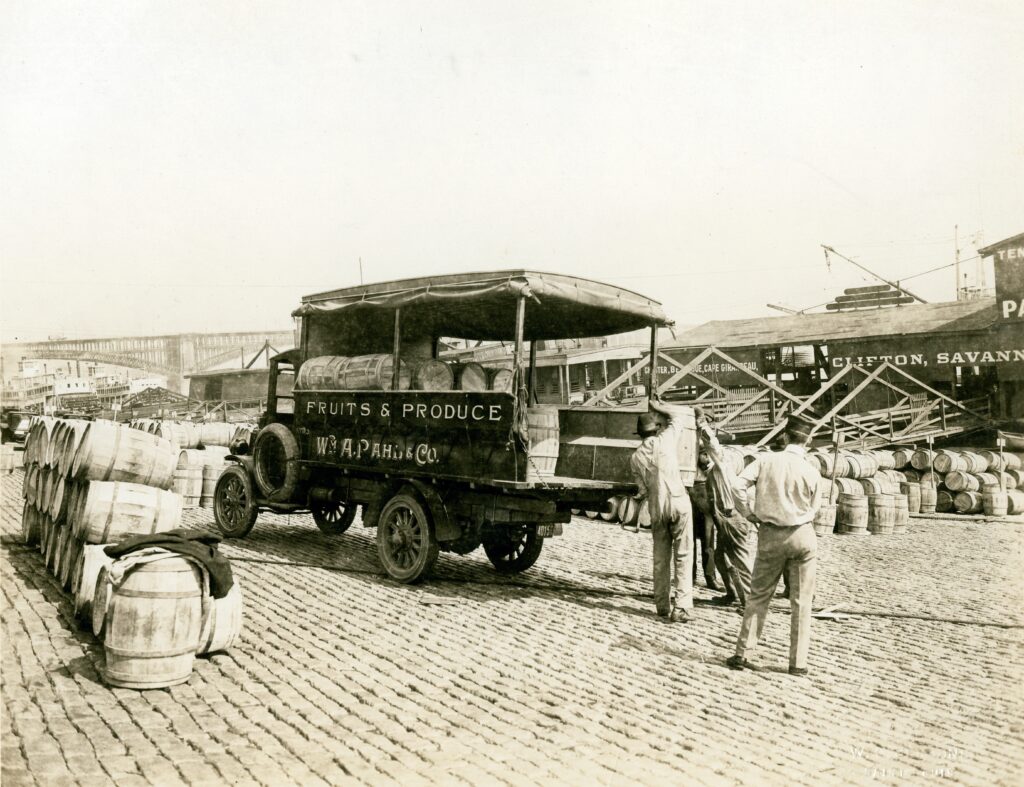
The 1890 Census shows him living on 8 acres at the corner of Union Blvd and Natural Bridge Road. He is now a notable member of the St. Louis Fruit and Produce Exchange – a syndicate of growers that help feed the city’s half million residents. In the summer of 1894, he is a signatory to an open letter published in the Globe-Democrat protesting the Pullman Strike because of the impact it is having on local businesses. But he is also among hundreds of St. Louis businessmen who donate food to the victims of an 1897 flood that inundated parts of Arkansas and Tennessee. In 1899, he appears on a long list of businesses and individuals (including a certain Adolphus Busch) who provided funds to support the organizing committee for the upcoming St. Louis World’s Fair. Also, in 1900 he donates relief supplies to the people of Galveston, Texas after they are hit by a devastating hurricane.
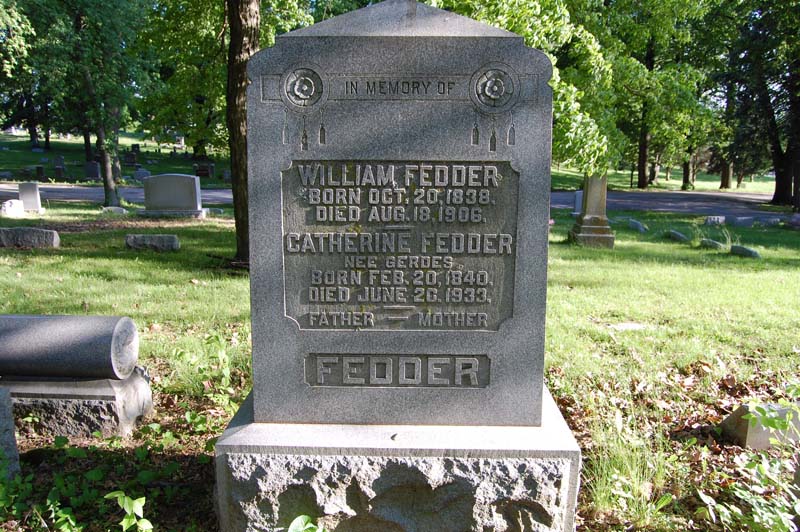
By 1902, at the age of 64, William is ready to retire. He passes his produce business on to his eldest son, William Jr. Then he sells his farm to the Union Press Brick Works for $22,000 (the equivalent of $850,000 in today’s money) and builds a fancy house on Shawmut Place where he lives out the rest of his days. William passed away in 1906 from heart disease, but Catherine would outlive him by another 25 years. During that time, she maintained a small portfolio of investment properties and continued to sell them whenever she or her children needed money. William and Catherine are buried at New Bethlehem Cemetery.



Pingback: Sleuthing Through Time – The Pipes Family Foundation