
This is the first in a series of posts about our collection of medallions from the Franklin Mint. The first two cover over a hundred years of North American history, from 1492 to 1620, during what is often called the Age of Discovery. Of course, Columbus was not the first to sail to the North American continent (and to their credit, the written historical summary that accompanies the coin acknowledges this fact). The Norse (aka the Vikings) established a settlement in what is now Newfoundland in 1021, pre-dating Columbus by almost 500 years. But I will say that the title of the Columbus coin echoes the prevailing misconception (or perhaps bias would be a better word) from the 1970s that the intrepid explorer actually set foot on what is now the United States. It is now common knowledge (I hope), that none of his four voyages made it any farther north than Cuba and the Bahamas. But what Columbus did do was open a whole new hemisphere to human history (much to the dismay of Native Americans), and the arrow of time that indicated the future, in the minds of all Europeans anyway, now pointed in a westerly direction.
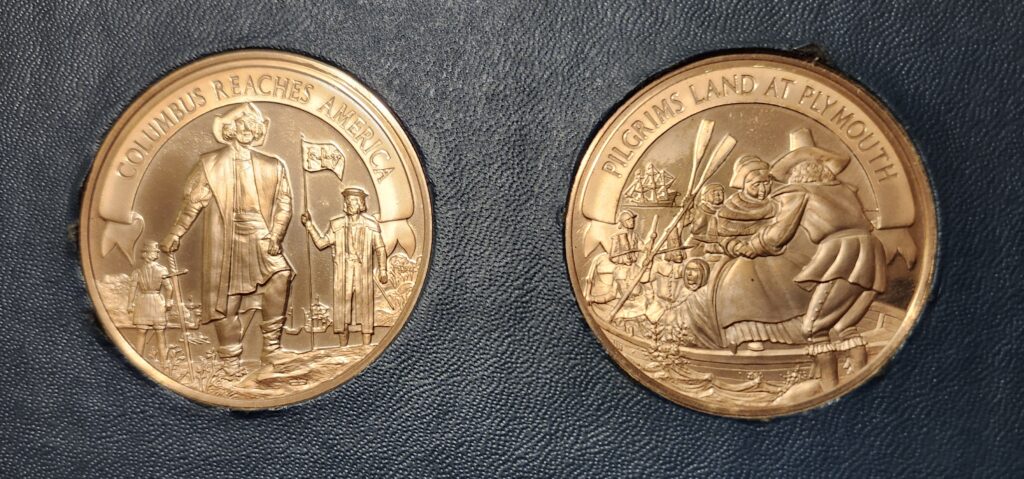
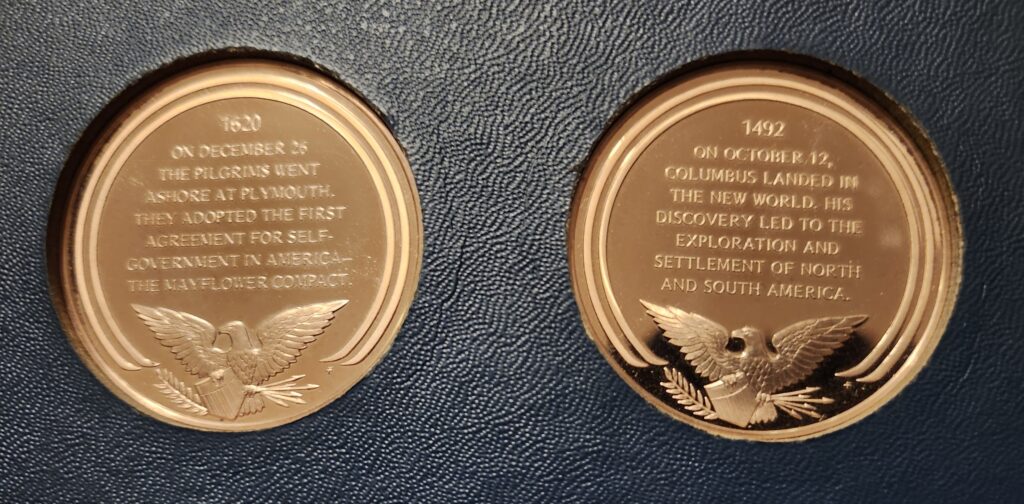
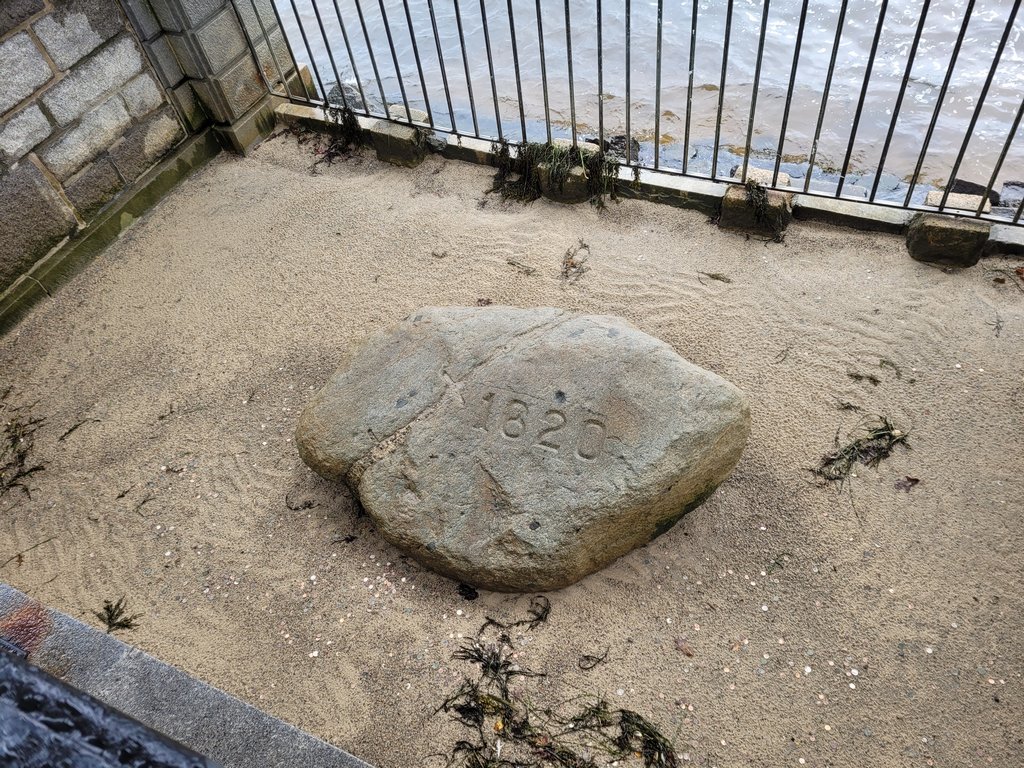
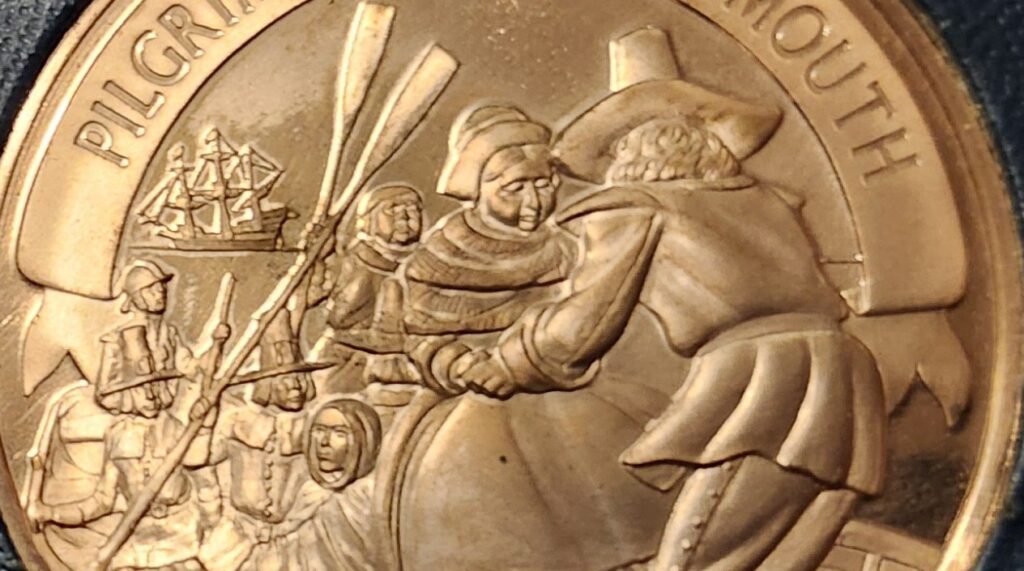
When you only have 24 coins to document 200 years of history, obviously some events have to be cut, no matter how significant, so the Franklin Mint chose to commemorate the Pilgrims and their founding of the Plymouth colony. The historical sketch that accompanies this coin mentions the huge slab of granite that came to be known as Plymouth Rock. It’s hard to know if this account reflects another bias of 1970s historians, or if the stone, which is only a few feet across today, really has shrunk from centuries of souvenir-seekers.