
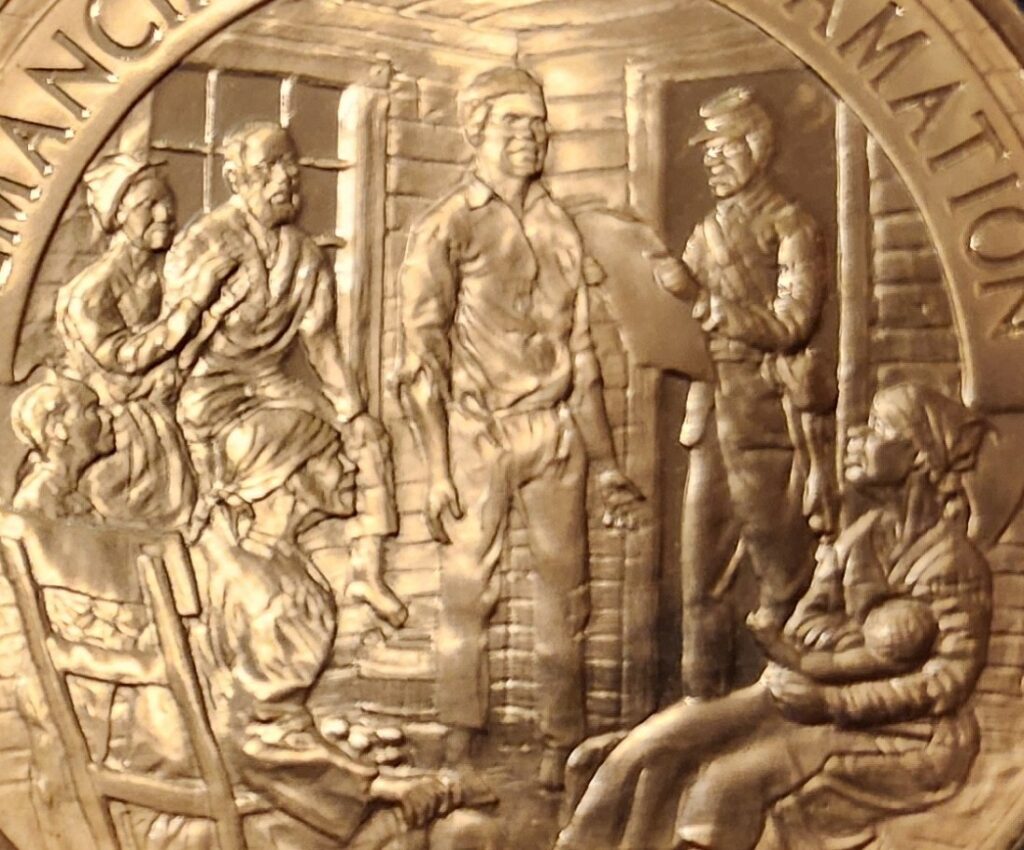

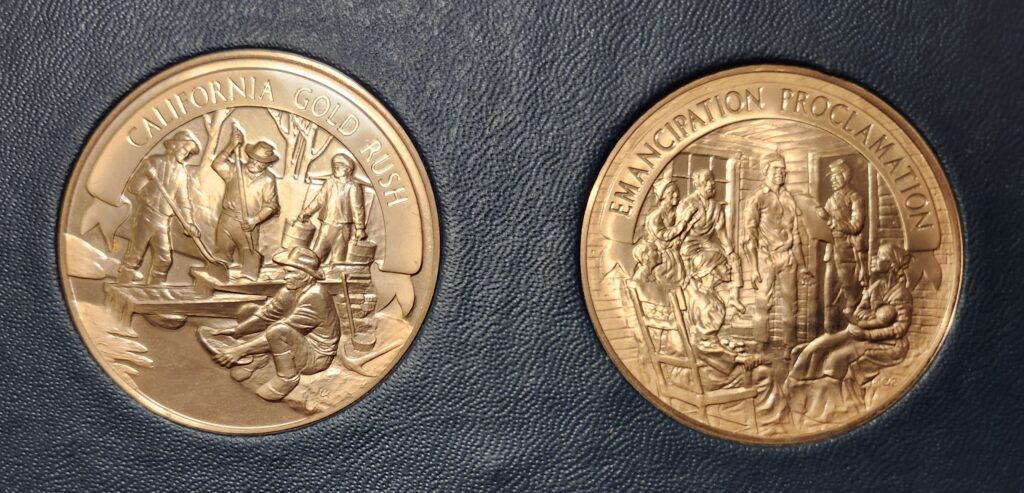
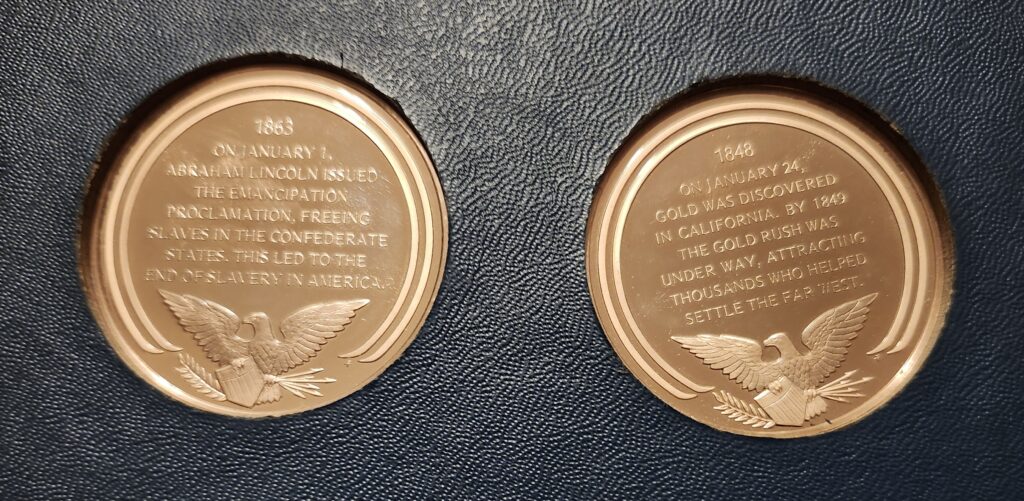
While they may not seem related, the next two medallions in our collection are actually connected in one important way: as the stories of these two events, the California Gold Rush and the Emancipation Proclamation, bring the racial tensions of the time into sharp relief. The gold rush wasn’t just about staking claims. It was also plagued by violence, mostly perpetrated against the Native Americans who already occupied the country where gold was found, as well as large numbers of ethnic minorities (such as the Chinese) who came to California looking to get rich. At the opposite end of the continent, the proclamation was largely a political gambit, but it was necessary to combat the white supremacists of the American south. Two different locations, same attitudes.
Our ancestors witnessed the North and South conflict play out in Kentucky and Tennessee, with violence erupting between families, resulting in lingering feuds (like Silas Monroe Pipes), and even within single families (like Pleasant Hickman). Today, we are 400 years removed from the introduction of slavery on this continent, and our society continues to reckon with the psychological and social impacts of these mournful decisions.
If you’ve never heard of the town of St. Louis, California, it was one of the earliest mining towns in the region that straddled the border between Plumas and Sierra Counties, appearing on maps as early as 1853. Established by a wave of Missouri residents who migrated west seeking their fortune, it was completely abandoned by 1900, and today it is a ghost town. If you’d like to learn more, this article at Western Mining History offers some details of what life there was like in the 1850s and 1860s.