
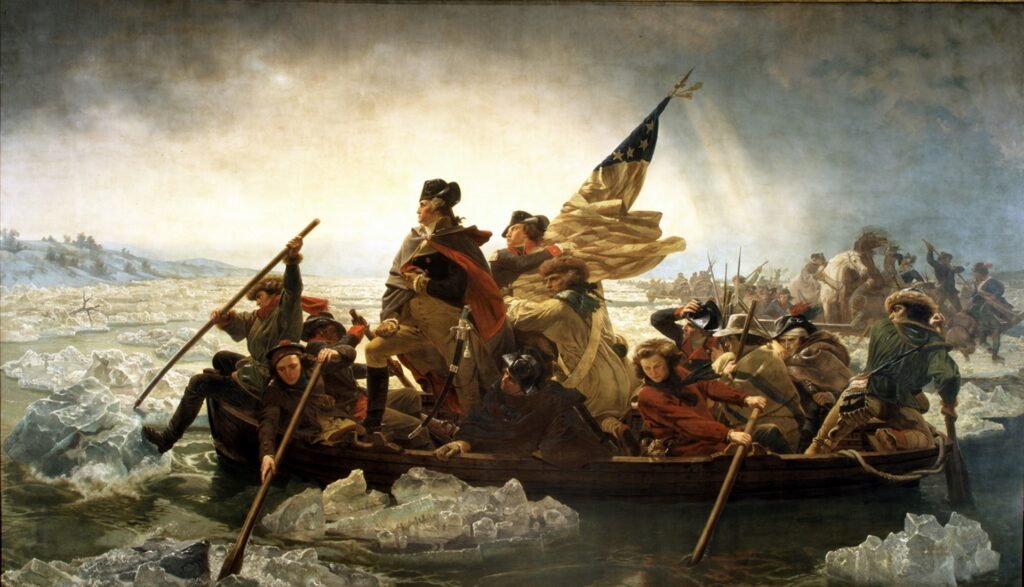

As schoolchildren, we all learn the legend of the crossing of the Delaware River depicted in the famous painting by Emanuel Leutze. We are told about the harsh conditions endured by George Washington’s army at Valley Forge. We honor the dedication of the soldiers who survived that bitter winter and went on to win the Battle of Trenton in December 1777. For many soldiers serving in the Pennsylvania Line, this engagement occurred at the beginning of what was to be a three-year enlistment, for which each soldier was entitled to a bounty of twenty dollars. But what happens when soldiers reach the end of their enlistment and are told by their commanding officers that they can’t leave? One potential outcome was known as the Pennsylvania Line Mutiny, and involved one of our ancestors named Michael Harmon.
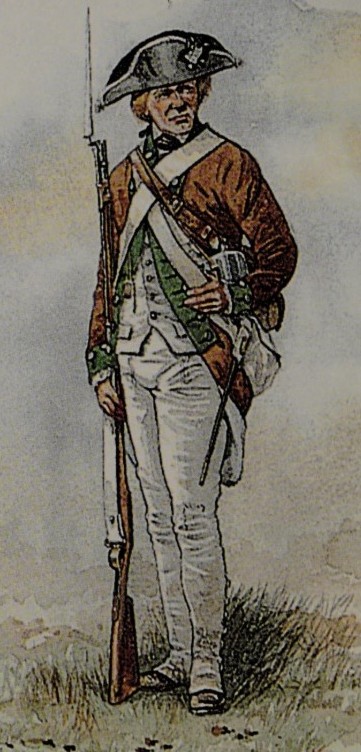
Michael Harmon was born in Germany in 1754 and then, in 1772, at the age of eighteen, he immigrated to Philadelphia. Upon his arrival, he was indentured as a tanner’s apprentice and had to work off the twenty-three dollars of his travel expenses. In May of 1777, he enlisted in the 4th Pennsylvania Regiment, 3rd Battalion, and spent 3 years fighting in and around the Philadelphia area, including that first winter at Valley Forge. His unit was involved in several battles throughout his service, but perhaps his most interesting skirmish was with the State of Pennsylvania. The story is not well-known, but the deplorable conditions that the soldiers endured certainly are, and they were well-documented by General George Washington in his many letters to Congress. He complained repeatedly about the lack of food and supplies (especially warm uniforms and shoes). And, of course, Congress’s inability to pay its soldiers their wages is also well-documented. One might start to wonder why any of these infantrymen stuck around as long as they did – but the truth is in most cases they were motivated by more than just money; a sense of duty and patriotism motivated them to continue the fight. But even these ideals have their limits, and every man has his breaking point.
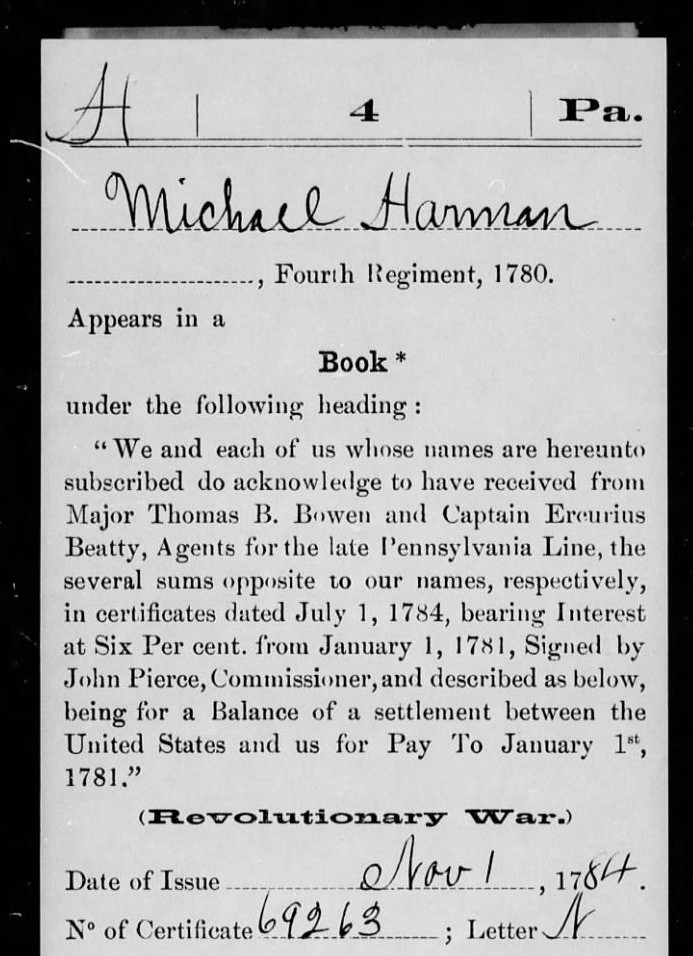
Despite the soldiers’ actions being labeled as mutinous, the reality is somewhat more nuanced. While it is true that the men rose up against their officers (Captain Adam Bitting was among those who died in the riots) in the early hours of the confrontation, there were no other casualties, and scholars at Penn State have described the entire episode as essentially a labor dispute. It is objectively true that these soldiers were being treated unfairly, and that the government of the State of Pennsylvania was in breach of contract. So the facts of the case are worth review. The soldiers all held to their principles and would not defect to the British Army, even when the redcoats tried to recruit them. They delivered their demands to their superiors, negotiated in good faith, and most of them re-enlisted after the conflict was resolved. We, as observers, are given very little reason to question the patriotism of those who started the mutiny, they just wanted what was promised to them when they signed up. And, as Michael Harmon’s muster card reveals, a settlement was reached in January 1781. He and the other soldiers received payment (with interest) in 1784, as provided by the wording on his muster card:
We and each of us whose names are hereunto subscribed do acknowledge to have received … the several sums opposite to our names, respectively, in certificates dated Jul 1, 1784, bearing interest at Six Per Cent from Jan 1, 1781 … being for a balance of a settlement between the United States and us for Pay to January 1st, 1781.
Michael chose not to re-enlist, and following his discharge, when he returned home in 1781, he married a woman named Margaret Trump. The two of them lived in Philadelphia for another 10 years (he appears on the tax rolls as late as 1792), and then they relocated to Mercer County, Kentucky. He and his family appear on the tax rolls there in 1795 and 1800. Michael Harmon died in 1807, and his wife (whom he called “Peggy”) followed him in 1815. They are both buried in a family plot in Mercer County.
As an aside to this story, while doing my research, I discovered that I was not alone in my interest in Michael Harmon. In fact, in 2015, the TV show Who Do You Think You Are collected essentially all of the same information for an episode about actress Angie Harmon. As it turns out, Angie is a cousin of ours.
Angie Harmon – photo credit Wikipedia




Pingback: Hiding From History – The Pipes Family Foundation